features

【Case Study】Automating Precision Parts with TT-2600IIWG: Why Okayama Neji Continues to Choose TAKISAWA

Case Studies

2026.10.08

#automation

#TT

Leveraging its core strengths in precision metal machining and integrated production systems, Okayama Neji Co., Ltd. manufactures critical components for industrial robotics, construction equipment, and hydraulic systems.

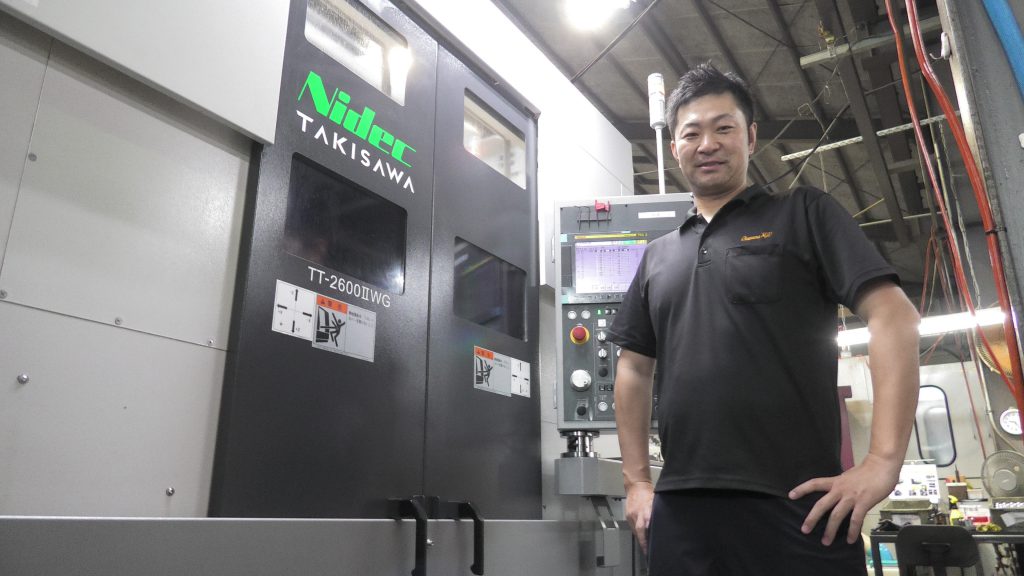
We sat down with Executive Director Yasufumi Iwaki to discuss the key factors behind choosing TAKISAWA’s TT-2600IIWG, their custom shop-floor automation setup, and their vision for the future.


【Company Profile】

・Company Name: Okayama Neji Co., Ltd.

・Core Business: Component manufacturing for industrial robotics, construction machinery, and hydraulic equipment.
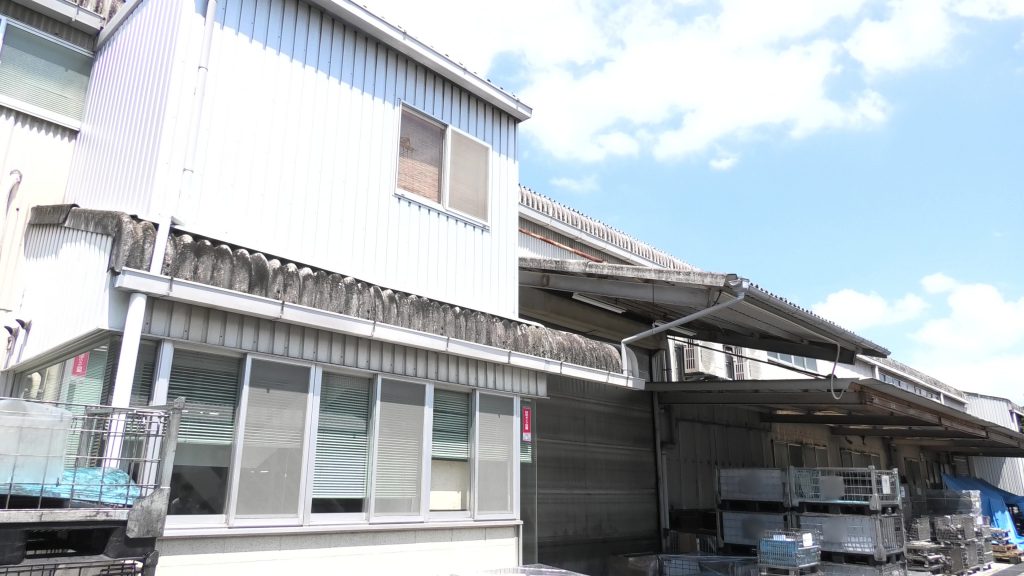
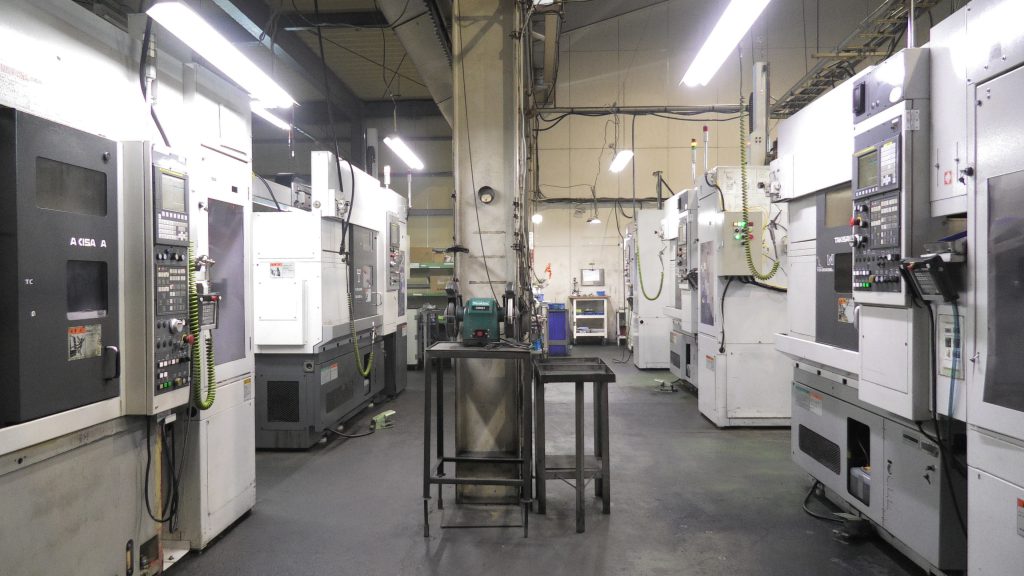
 

Section 1: Integrated Production—From Raw Materials to Grinding

Q: To kick things off, could you give us an overview of your business and the types of workpieces you handle?

Executive Director Yasufumi Iwaki: Our primary operations focus on end-to-end component manufacturing—centered on precision metal machining—alongside the assembly of hydraulic control valves. We manufacture critical parts used in industrial robotics, construction machinery, and hydraulic systems, handling a wide range of component sizes from φ5 mm to φ300 mm.

In our machining operations, we use lathes and multi-tasking machines for single-chucking setups, allowing us to machine complex parts with high precision. We excel at lathe machining for round stock as well as irregular geometries, and we specialize in precision workpieces featuring multiple small-diameter holes, such as valve components.
On top of that, we maintain full in-house capabilities—from post-heat-treatment high-speed finish turning to centerless and cylindrical grinding. This integrated setup allows us to guarantee stable quality, even on parts with the tightest final precision tolerances.

Section 2: Micron-Level Ultra-Precision Powered by 24/7 Automation

Q: What do you consider Okayama Neji’s single greatest competitive edge?

Executive Director Yasufumi Iwaki: It comes down to our high-precision mass production system, driven by advanced automation.
Building on over 60 years of technical expertise, process engineering, and quality control, we integrate automated equipment—including NC lathes, multi-tasking machines, and machining centers. This allows us to mass-produce high-precision components that competitors find too difficult to handle, all with consistent quality.

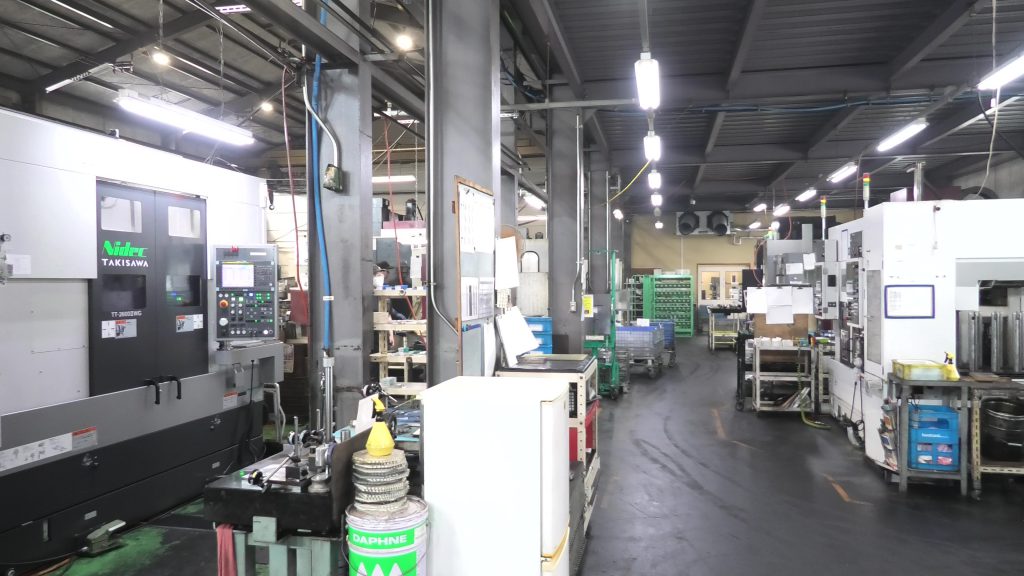
Additionally, our facilities operate 24 hours a day, giving us the capacity to reliably handle high-volume production runs. Supported by three manufacturing sites in Okayama and a subsidiary in Dalian, China, we operate a global production network capable of supplying components from both Japan and China. This dual-source approach optimizes costs, lead times, and output volume, giving us complete flexibility to meet diverse customer needs.

Ultimately, our relentless pursuit of innovative manufacturing—continuously adopting new machining methods and automation tech—is what drives us forward.

Section 3: Compact, High-Speed Automation

Q: What were the main factors that led you to select TAKISAWA’s TT-2600IIWG?

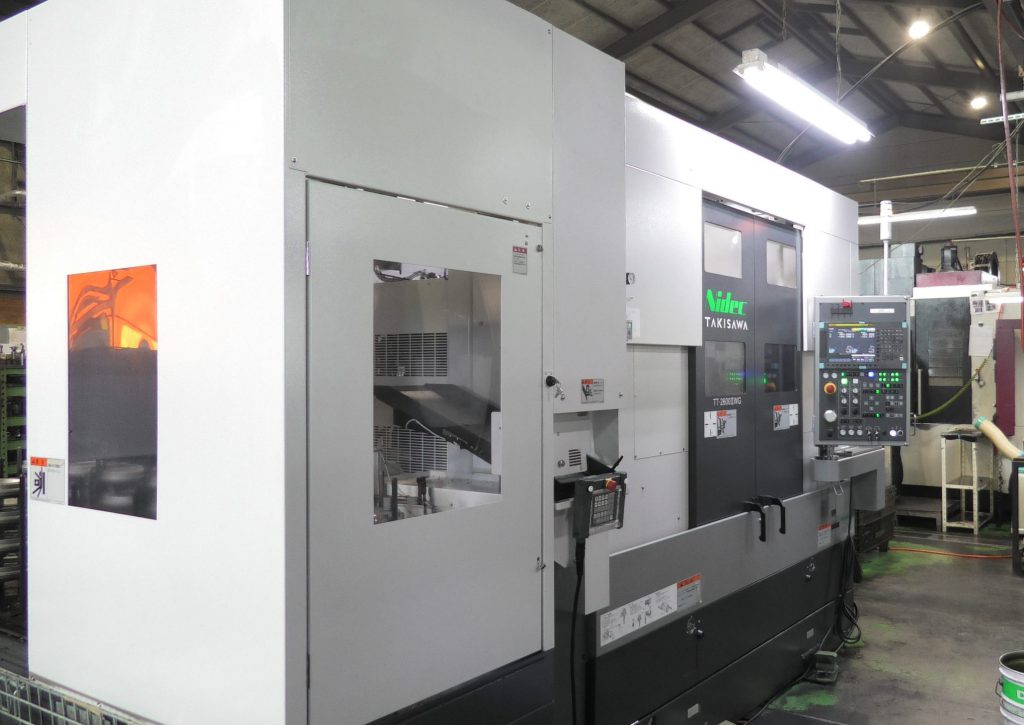
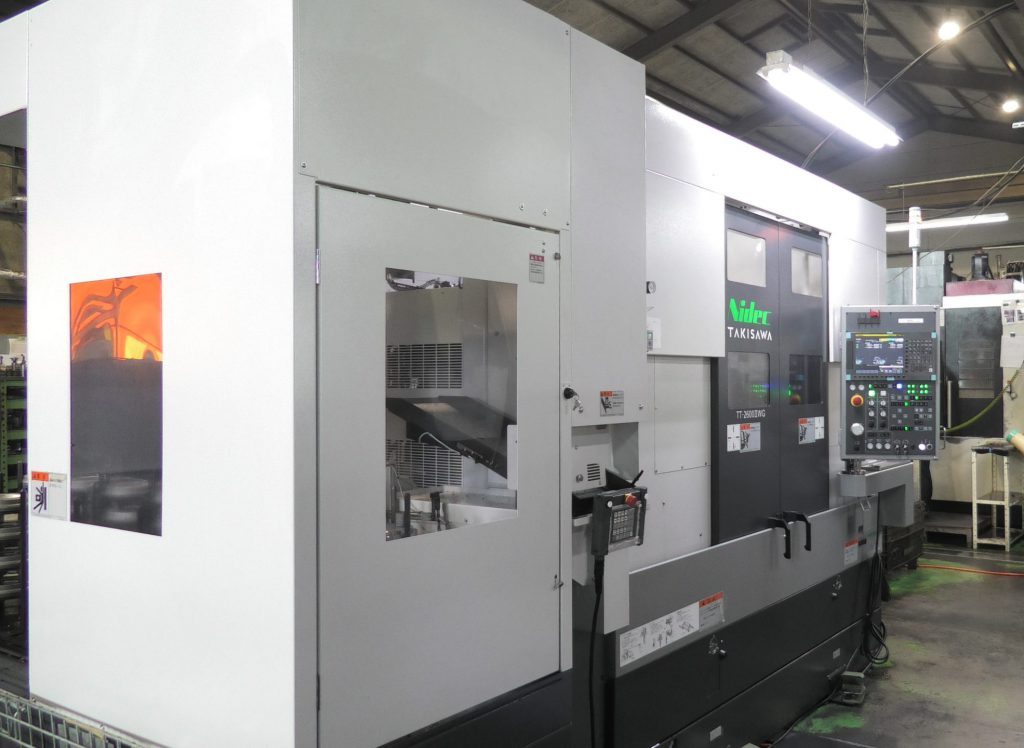
Executive Director Yasufumi Iwaki: The main factor was its streamlined design, which integrates an NC lathe and a gantry loader into a single, highly compact package. Beyond its small footprint and layout flexibility, the gantry loader’s rapid motion speed directly translates into higher productivity.

Another major feature was TAKISAWA’s “Raku Raku Loader” software. Being able to intuitively adjust loader parameters—such as spindle stop positions, air blow duration, and chuck open/close timing—directly on the NC screen vastly improves our setup efficiency on the floor.


Section 4: Shop-Floor Customization & Performance Results

Q: How are you utilizing and customizing the machine on the factory floor?

Executive Director Yasufumi Iwaki: We run these machines around the clock as core assets on our production lines. We operate a broad range of TAKISAWA equipment—from single-spindle TCC-2100 models to parallel dual-spindle TT-2600IIWG units—and they have proven exceptionally effective for automated machining of complex, non-standard workpieces.

To ensure stable mass production of irregular shapes, we design custom automated lines tailored to each part. This includes dedicated positioning units, custom loader jaws, tailor-made stockers, and specialized chuck setups.

For heavier parts, we modified the loader system itself to achieve full automation. By automating the loading, flipping, and transfer of heavy components—tasks that previously required manual effort—we achieved major gains in both throughput and worker safety.

Q: What has been your experience running the machine day-to-day?

Executive Director Yasufumi Iwaki: The first thing we noticed was the footprint reduction, which improved both workflow and shop-floor safety. TT-2600IIWG is significantly more compact than our previous two-robot setup, offering greater layout freedom and smoother operator movement.
In terms of machining performance, the repeatability is exceptional. Dimensional drift is virtually nonexistent, even during extended unattended runs, allowing us to maintain micron-level accuracy across high-volume batches.
Minor stoppages are also extremely rare. Fewer downtime incidents mean our productivity has climbed, keeping us right on schedule. Establishing this level of reliable automation has not only boosted internal efficiency, but it has also helped us win new customer contracts.

Section 5: Trusted Support & Future Outlook

Q: Why have you maintained such long-term loyalty to TAKISAWA?
Executive Director Yasufumi Iwaki: It comes down to two things: stable repeatability on automated lines and outstanding technical support. TAKISAWA consistently delivers the precision we need to run our lines with total confidence.

When we approach them with difficult automation requests—like handling complex shapes or heavy parts—they adapt flexibly to solve the problem directly on our floor. Their aftermarket support is unmatched. Whenever we ask, “How can we automate this shape?” their team never gives up. They analyze the challenge thoroughly and walk us through what will work and why. We deeply value their technical expertise, integrity, and fast response times. They act as a true partner in our production.


Q: Looking ahead, what is your strategic vision for Okayama Neji?
Executive Director Yasufumi Iwaki: We plan to build on our core hydraulic machining capabilities and quality standards while expanding into broader industries.
We want to be the go-to company for complex geometries and difficult specifications that other suppliers turn down—the shop clients call when they say, “Only Okayama Neji can automate this.” By continually refining our process engineering and automation capabilities, we aim to push the boundaries of what automated manufacturing can do.

________________________________________

Okayama Neji Co., Ltd.

Address: 810-11 Kurisaka, Kurashiki-shi, Okayama 701-0113, Japan

Website: https://www.okayama-neji.co.jp/

________________________________________

【MACHINE SPECIFICATIONS FEATURED】

■Parallel Dual-Spindle CNC Lathe TT-2600IIWG

  • Key Features: Twin parallel spindles, integrated gantry loader, and workpiece turnover unit for high-volume automation. Independent spindle control allows simultaneous front/back machining or twin identical operations.
  • Chuck Size: 12 inches + 12 inches
  • Max Machining Dimensions: Φ340 mm ×L184 mm

Click here for other specification ”TT-2600IIWG”