features

【Case Study】The Origin of Technology That Shook the Global F1 Scene: Toda Racing Shares the Secret Story Behind the Creation of “TPS,” and the Philosophy of Manufacturing

Case Studies

2026.09.15

#F1

#Pinton

Yakage Town, Oda District, Okayama Prefecture

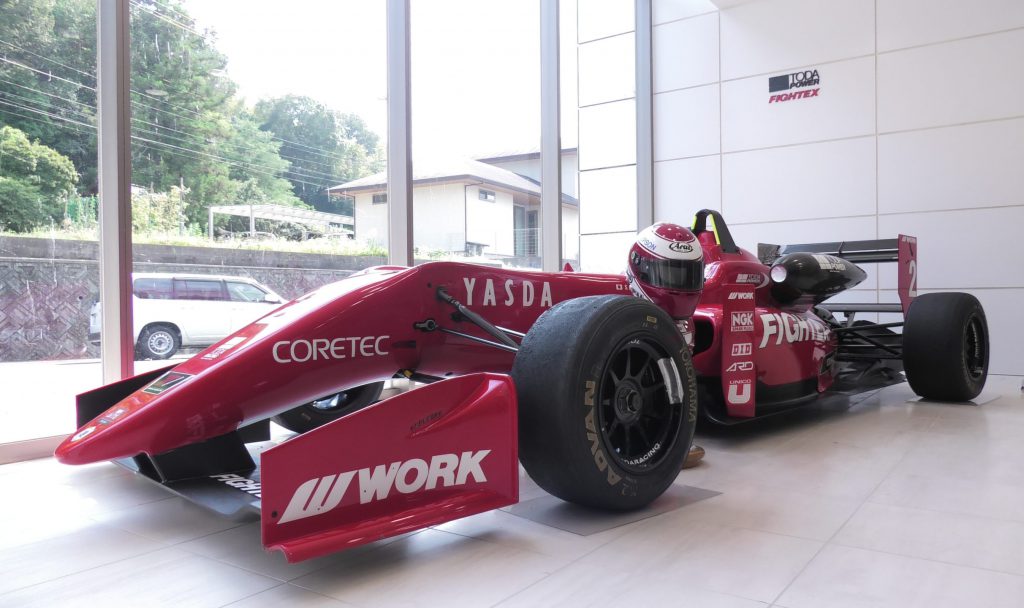
—in this serene, rural landscape lies a highly respected technical group that commands the attention of the global racing industry and major domestic and international automakers. This is Toda Racing Co., Ltd., the subject of our interview.

Despite having a workforce of only about 50 employees, the company handles everything in-house: from the design and development of racing engines and components to proprietary electric motors, inverters, and cutting-edge combustion test equipment.

They also served as the “co-development partner” that quietly supported the creation and global expansion of TAKISAWA’s non-circular CNC lathe”TPS,” series, which has now become the de facto world standard for piston machining.

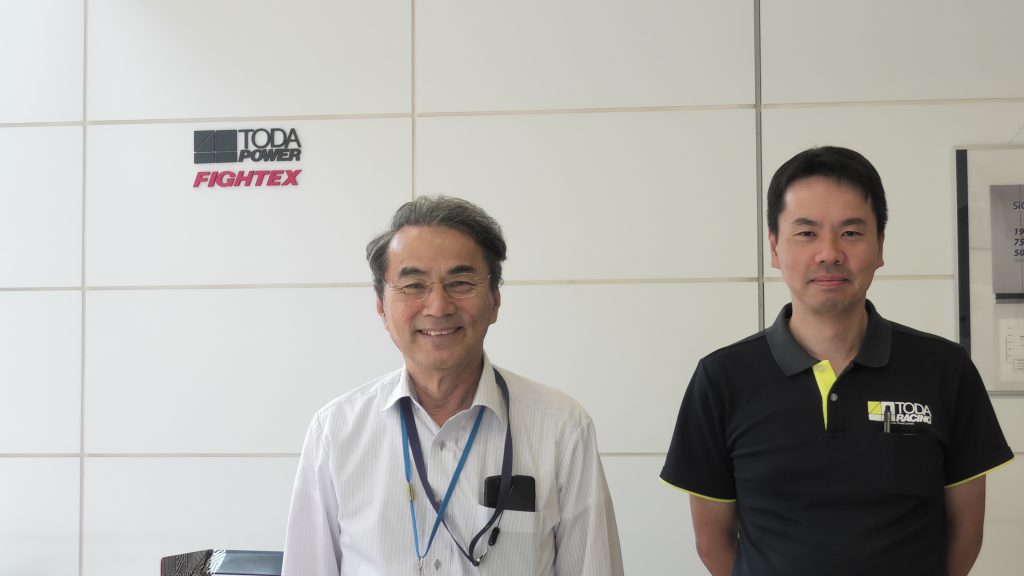
We sat down with the founder, Chairman Yukio Toda, and the second-generation President, Kengo Toda, to talk in depth about their cinematic founding story, the behind-the-scenes development of “TPS,” and their philosophy of “recognizing the true essence of things” in manufacturing.


【Company Profile】

Company Name: Toda Racing Co., Ltd. (Founded in 1971)

Business Description: Design and manufacture of racing and competitive components, contract machining (automotive, aerospace, and space-related), and production of automotive testing equipment and R&D prototype vehicles. The company maintains an integrated in-house system covering everything from initial component design, digital assembly models, manufacturing, assembly, to physical bench testing.

A Near-Death Experience and a False Fire Report!? The Dramatic Journey of One Man and His Racing Legacy

Q: We understand that the history of Toda Racing had an incredibly dramatic beginning.

Chairman Yukio Toda:It all started back when I was a student. I saw a 12-cylinder engine screaming down the track at Suzuka Circuit, and I fell head over heels in love with its overwhelming power. Later, I got a job at a major automotive manufacturer in Okayama Prefecture.

One year, around the end of December, I was traveling to Suzuka for a practice session. While waiting at a red light, my car was violently rear-ended by a truck driven by a drunk driver.

I barely managed to survive, but it was truly a near-death experience. At that moment, I thought to myself, “My life was almost cut short. If I’m living on borrowed time, I should spend the rest of my days doing what I love most: racing.” So, I invited a friend, signed up for a race, and entered a 12-hour endurance race in 1970.

However, an unexpected incident occurred during that race.

After swapping out of the driver’s seat, I stepped away to the restroom. When I returned and looked at the leaderboard, the vehicle number listed as “ON FIRE” was none other than our own car. The race was red-flagged.

As it turned out, the car actually on fire belonged to another team; there had been a mistake in reading the car numbers. My friend was completely unharmed, and we even managed to win our class.

Yet, the shock of the incident made me think, “Maybe I have to quit racing.” But I simply could not give up on my passion. That was when I resolved, “If I stop sitting behind the wheel as a driver, I will turn to the building side.” That resolve led to the founding of Toda Racing in 1971.

For a while after that, I immersed myself entirely in racing. But in 1990, I decided to make a major strategic pivot, telling myself, “Let’s not limit ourselves to racing; let’s establish a serious manufacturing business as well.”

This was the beginning of our current dual-track business approach, balancing motorsport with high-precision manufacturing.

Chairman Yukio Toda and President Kengo Toda

Overcoming the Japanese Barrier of "No Proven Track Record": How “TPS,” Conquered the World Starting from European Motorsports

Q: So, during your transition to serious manufacturing in 1990, you crossed paths with TAKISAWA.

Chairman Yukio Toda: Yes. To kick off our manufacturing operations, the very first machine we brought in was TAKISAWA’s 10-inch chuck lathe, the “TC-3” (now the TCN-3500).

At the time, other piston manufacturers were doing copy-turning of pistons. However, because the machine speeds were slow and much of the process relied heavily on manual work, it was incredibly difficult to consistently achieve the micron-level precision we demanded.

So, I reached out to TAKISAWA and asked, “Can you build a CNC machine dedicated to non-circular piston machining?”

It turned out they were already looking into developing a similar machine, and I was fortunate enough to meet an outstanding engineer there.

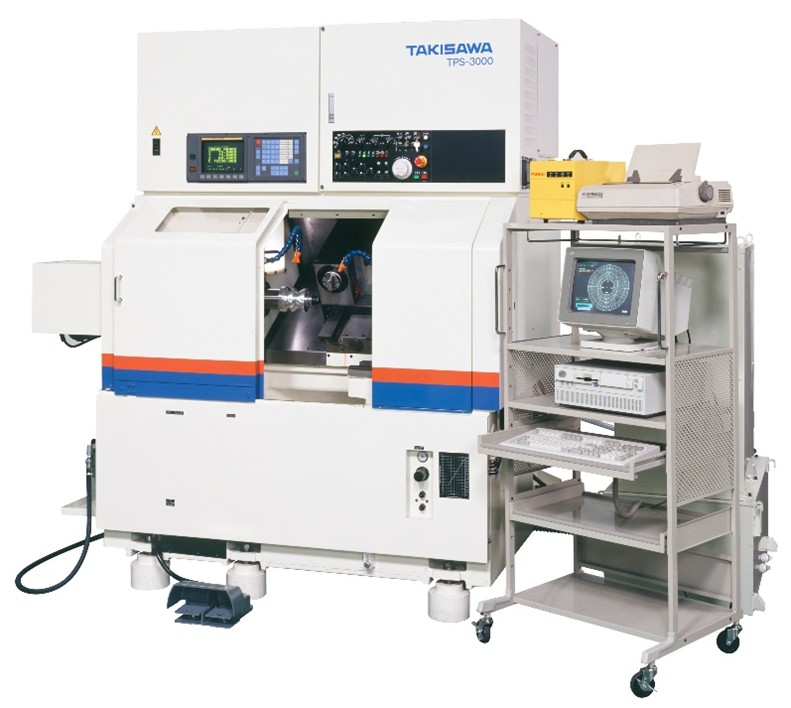
From that point, things moved at lightning speed, resulting in the birth of the first-generation non-circular CNC lathe, “TPS-3000.”

The very first, first-generation TPS-3000 delivered

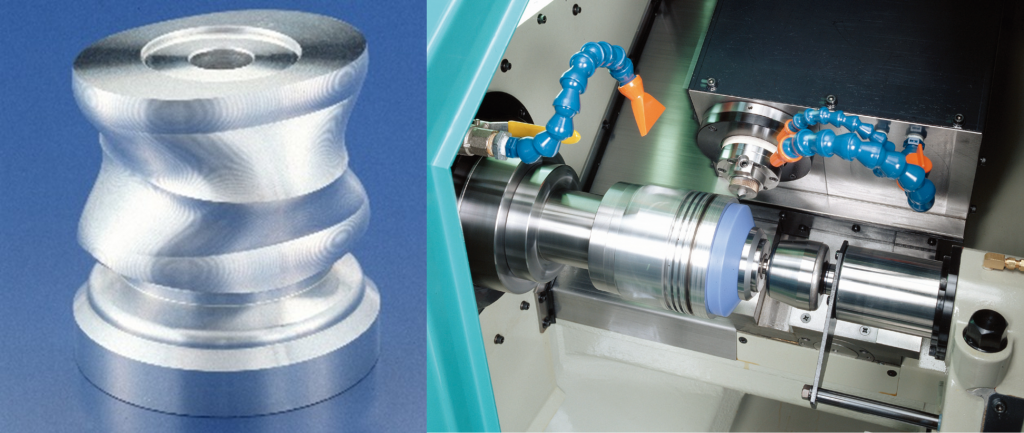
Machining with “TPS,”

Q: When you showed the pistons machined by the co-developed “TPS-3000” to those around you, how did the industry react?

Chairman Yukio Toda: We showed the pistons cut on our finished first-generation TPS to representatives from Japan’s leading piston manufacturers.

Everyone was amazed, saying, “This is an extraordinary piston! We absolutely want to introduce this machine!”

Yet, in the end, they would always add, “…But this machine has no established track record in the market yet,” and they passed on it.

We bumped right into the wall of “precedent-first” thinking, a mindset peculiar to Japan that shies away from unproven, new technologies.

Faced with this, we decided to introduce the TPS to the overseas racing scene first, where people judge a machine solely on its “performance” rather than its brand or past credentials. True to our expectations, the TPS was gradually recognized for its overwhelming precision in European motorsports, and its popularity spread like wildfire.

After a certain point, the lap times of overseas racing cars began to drop rapidly. A big buzz went around the industry: “What on earth is going on?” The heart of those high-performing engines was none other than the ultra-high-precision pistons machined right here on TAKISAWA’s TPS.

Eventually, our TPS-machined pistons were adopted by a legendary Italian racing team.

There was even a story where Japanese engineers from a major domestic automaker visited Europe, heard rumors that “Europe has a top-tier piston machining lathe,” and upon investigating, discovered it was actually the Japanese-made TAKISAWA TPS.

A machine that could not find a home in Japan due to a lack of “proven track record” had proved its worth abroad, prompting Japanese manufacturers to hurriedly reconsider its adoption once they heard the international acclaim. It was a thrilling, dramatic reversal. This triumph propelled the TPS beyond the racing world and directly into the global automotive industry.

Identifying the "World Standard": Trusting Your Instincts to See the True Essence Without Swayed by Others

Q: Your sharp eye for recognizing quality has truly shaped global technology trends.

Chairman Yukio Toda: If you only worry about other people’s “track records” and “precedents,” you will never get your hands on anything truly groundbreaking. What matters most is seeing it with your own eyes, using it yourself, and recognizing its intrinsic value.

Take our introduction of the overseas-made, state-of-the-art 3D CAD/CAM software, which has now become the industry standard. Back then, many voices around us criticized it, saying, “Something like this is completely useless.” But the moment I saw it, I had an intuitive feeling:

“This is, without a doubt, going to be the future world standard.” I wasted no time implementing it into our operations.

Sometime later, rumors of how incredibly well we were mastering the software reached the developers and distributors abroad. Their engineers traveled all the way to our factory in Okayama just to hear our feedback. They asked us, “Could you show us how you manage to utilize this software to such an advanced degree?”

It was the exact same story with TAKISAWA’s TPS. From the very beginning, I had absolute conviction that “this will become a genuine machine that no other company can ever replicate.” Recognizing what is truly good on your own, believing in its potential, and pushing forward—that is the most vital asset in the world of manufacturing.

Introducing the Latest "TPS-3400HⅡ": The Ultimate Balance of "Lightweight Design and High Rigidity" with All Waste Stripped Away

Q: In August 2026, Toda Racing introduced its third-generation TPS, the latest “TPS-3400HⅡ.” Could you share why you chose this model?

Chairman Yukio Toda: The newly introduced “TPS-3400HⅡ” consolidates both the outer-diameter oval (non-circular) machining and ring groove machining into a single machine. Compared to our second-generation “TPS-4000,” we expect this to significantly shorten our cycle times.

In the past, I looked into heavy, massive piston-machining lathes from other manufacturers that featured large tool posts. However, if the tool post itself is too heavy, the rapid back-and-forth movement required to machine complex non-circular piston profiles inevitably generates severe vibration.This makes high precision hard to achieve, limits the spindle speed, and ultimately drags out the machining time.

By contrast, TAKISAWA’s TPS strips away every bit of unnecessary weight, pursuing an ultra-lightweight tool post with lightning-fast response. This design allows the tool post to move back and forth at high speeds and high frequencies without generating any vibration, preserving extreme precision.

On top of that, the TPS is incredibly robust; it is so reliable that it feels virtually indestructible even after decades of continuous use. This flawless synergy of “lightweight design,” “high rigidity,” and “outstanding durability” is why we have placed our unwavering trust in TAKISAWA’s TPS for over a quarter of a century.


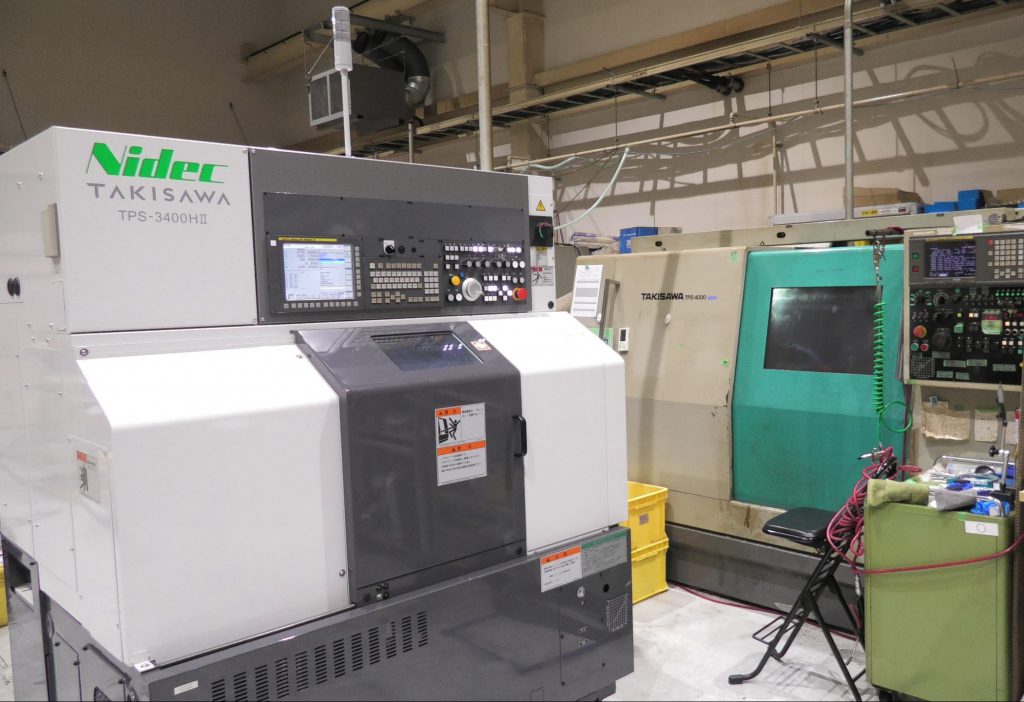
The third-generation TPS “TPS-3400HⅡ” (foreground)

and the second-generation TPS “TPS-4000” (background)

Hydrogen Engines and In-Wheel Motors: Venturing from a Quiet Countryside into a 1,000-Horsepower Future

Q: Toda Racing is not just about piston machining. We hear you are also undertaking highly unique development in next-generation clean energy and EV technology.

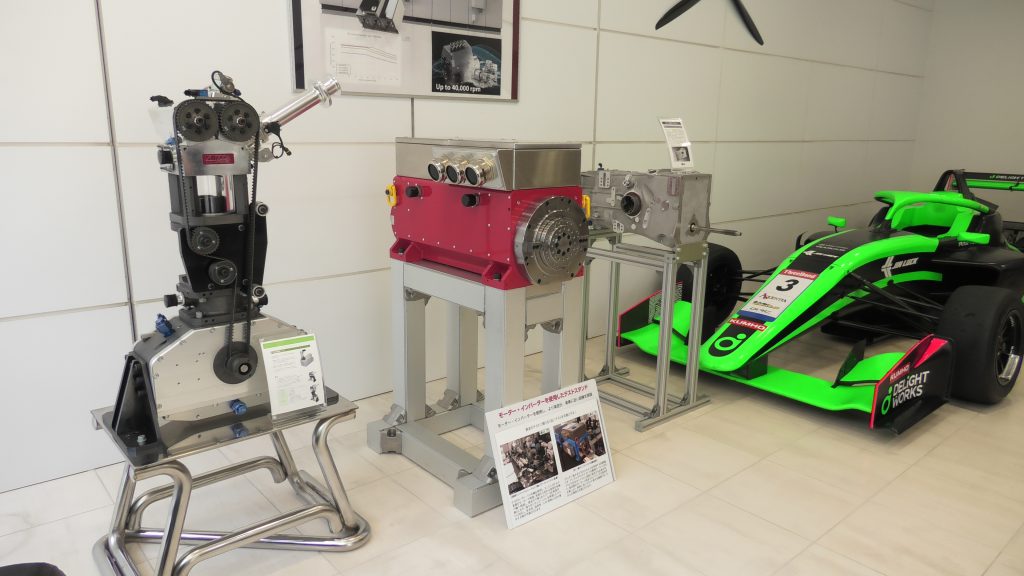
Chairman Yukio Toda: We custom-build “single-cylinder optical combustion engines” for various automakers and university research departments. This is a highly specialized piece of testing equipment where the cylinder portion is crafted entirely out of transparent sapphire glass.

It allows researchers to directly observe the behavior of the piston and rings, as well as how the fuel ignites and burns inside the cylinder, using high-speed cameras. It is truly a one-of-a-kind, tailor-made testing apparatus.

Today, green next-generation engines running on alternative fuels like hydrogen are being researched globally. Our optical combustion visualization technology plays a vital role in these studies to optimize combustion efficiency and minimize emissions.

In addition, we are actively developing our own “in-wheel motors” (electric motors integrated directly into the wheels) in anticipation of the EV era. We have established an in-house system for the critical motor-winding process, which directly dictates motor performance, keeping everything under our direct control rather than outsourcing.

Passing the Technical Baton: A Timeless "Generational Link of Technology" Inherited from Parents to Children

Q: President Kengo Toda, could you tell us what led you to join and eventually lead the company?

President Kengo Toda: My root goes back to my childhood, when my father took me to the racetrack. I was completely captivated by the overwhelming energy of motorsports. That was during the golden era when racing was gaining massive popularity across Japan.

Later, I worked at another company as an engineer dealing with cutting-edge 3D CAD/CAM software, deeply involved in the design and development floor of major car manufacturers.

However, the more I experienced those state-of-the-art manufacturing processes, the stronger my desire grew: “I want to bring this sophisticated engineering to life with our own hands, directly in our own factory.” That realization led to my decision to join Toda Racing.

Lately, thanks in part to video streaming services, interest in motorsports is surging once again among the younger generation. Although people often talk about a decline in interest toward manufacturing today, highly ambitious young engineers who say, “I want to race for real” or “I want to build a real engine” are gathering here at our factory in Yakage.

Among these passionate young engineers, there is actually a young man whose father was the TAKISAWA engineering lead who worked alongside Chairman Toda to co-develop the original “TPS.”

The baton of technology forged by the fiery passion of the fathers has now been passed down to the generation of their sons, who are shaping a new future on the floor of Toda Racing. In this quiet countryside factory, a hot, intergenerational link of technology continues to drive us forward.

Q: Chairman Toda, do you have any personal challenges you wish to take on next?

Chairman Yukio Toda: My dream right now is to build a “monster machine boasting over 1,000 horsepower”—fully combining a turbocharger onto an engine designed in-house, coupled with our own transmission and electric motor—from scratch right here, and drive it myself (laughs).

I am 79 years old this year, but I still sit in front of the CAD screen every day, completely absorbed in designing engines and various other machinery. Doing the work I love 365 days a year leaves me absolutely no time to grow old (laughs).

Always tackling “something interesting that no one else is doing” is the very soul of Toda Racing. And TAKISAWA’s machines, which support our challenges at the highest level, will remain our indispensable partners as we continue to take on the world together.


________________________________________

Toda Racing Co., Ltd.

Address: 640-1 Naka, Yakage-cho, Oda-gun, Okayama 714-1215, Japan

Website:https://toda-racing.co.jp/english/

________________________________________

【Introduction of the Machine Introduced this Time】

■ Non-Circular CNC Lathe “TPS-3400HⅡ”

  • Consolidates both the outer-diameter oval (non-circular) machining and ring groove machining into a single machine. Achieves dramatic productivity improvements through process integration by seamlessly combining high-precision non-circular turning and groove cutting.
  • Supports operational ease and work efficiency improvement through the proprietary processing programming software “TPPF4.” Designed for intuitive operation, strongly supporting quick setup changes and shop-floor productivity.
  • Maximum Processing Diameter / Maximum Processing Length: Φ260 mm / 285 mm

Click here for other specifications "TPS-3400HⅡ"